Khiva: The Silk Road Wakes
The City That Never Stopped Being a City
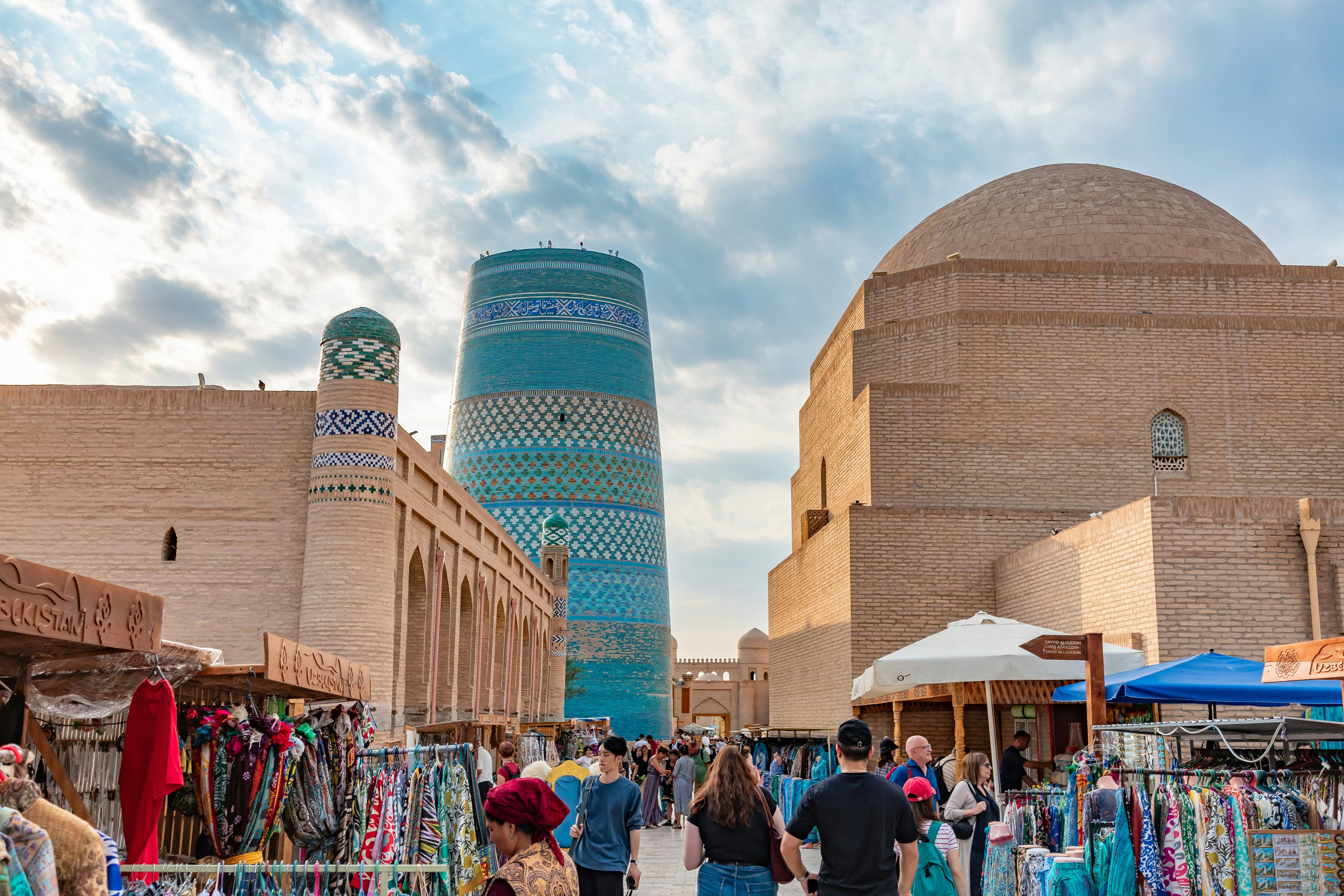
Turquoise tilework glowing in early morning sunlight in Khiva
The gate swings open before the city does. At dawn inside Itchan Kala, your boots crunch across ancient stone while the desert breathes its first cool exhale of the day. Somewhere nearby, a tandoor is already hot — the yeasty perfume of non bread drifting through alleys that have carried that exact smell for a thousand years. Turquoise tilework catches the earliest light, electric blue against walls the color of dried earth. No crowds. No commentary track. Just wind threading through carved wooden columns, and the quiet, startling realization that you are standing inside a city that never stopped being a city.
Why Now
Uzbekistan's high-speed rail network reaches Urgench — Khiva's gateway city — in 2026, slashing travel times from Tashkent from an overnight ordeal to a manageable few hours. This is the window. The one before the itineraries multiply and the café menus appear in five languages.
Khiva is a UNESCO World Heritage Site, but don't picture a museum. Families hang laundry between monuments. Craftsmen plane wood for carved doors in the same workshops their grandfathers used. Your presence here feels earned rather than packaged.
For slow travelers, this rhythm is the whole point. You don't consume Khiva — you settle into it, even briefly, and let it recalibrate your sense of time.
Quick Tips:
-
Get there: High-speed rail to Urgench, then a 30-minute taxi
-
Best season: April–May or September–October; summers are genuinely brutal
-
Stay inside the walls: A handful of guesthouses operate within Itchan Kala itself — book early
The VoyZee Moment
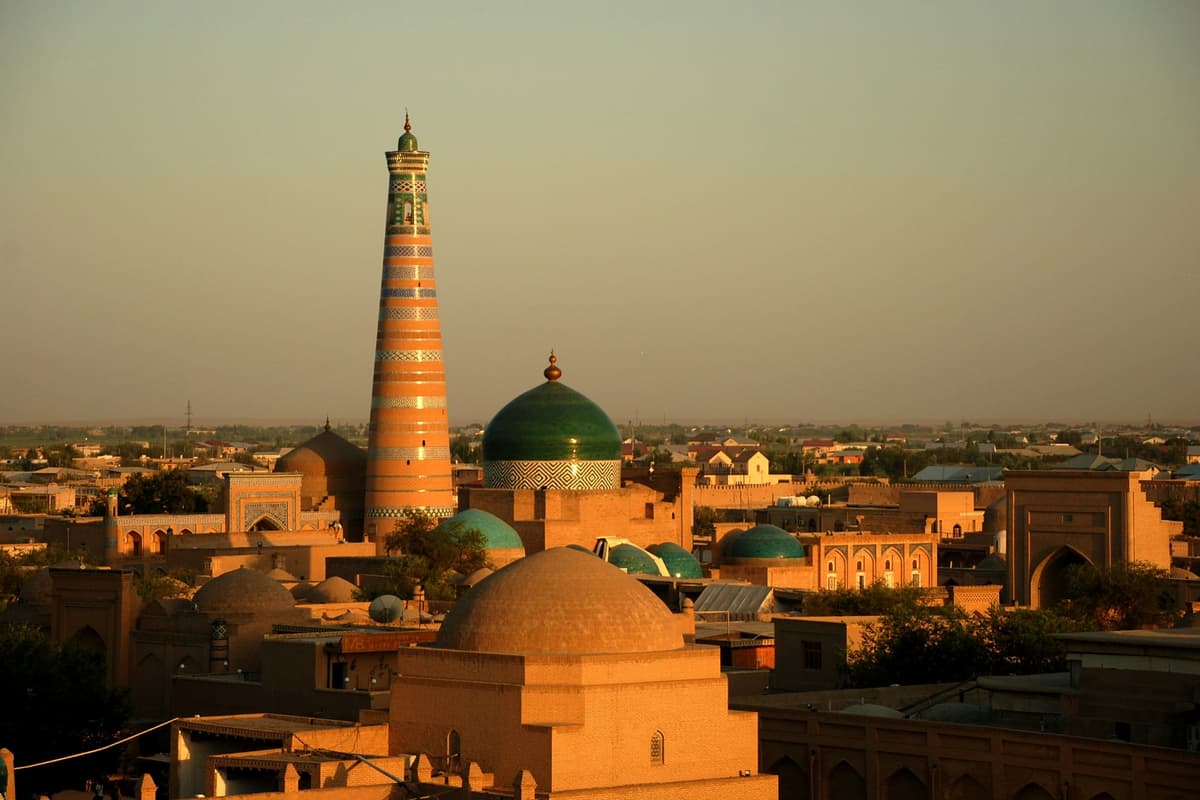
Climb the Islam Khodja Minaret and do it before 8am. The spiral staircase is narrow and unforgiving, but the platform at the top reframes everything. To the west, the Kyzylkum Desert dissolves into a pale horizon with nothing to interrupt it. Below, the medina's geometry — domes, courtyards, flat rooftops — arranges itself like a map of a civilization that decided to stay. This is the 360-degree perspective that no photograph will ever quite get right. You'll try anyway. That's fine.
The Local Flavor
Do not leave without eating Shivit Oshi — Khiva's own variation of hand-pulled noodles, colored an improbable bright green from fresh dill and served with a slow-cooked lamb stew. It tastes like a region asserting its identity on a plate. Find it at a local chaikhana; the plastic tablecloth spots are always the right call.
Here's what the guidebooks bury in footnotes: Shivit Oshi is one of Central Asia's most quietly extraordinary dishes, and Khiva is the only place you'll eat it properly.
The noodles are pulled by hand and dyed an almost improbable jade green with fresh dill — not as a gimmick, but as a centuries-old regional signature. They arrive beneath a slow-cooked lamb stew that's been given the time and patience most kitchens no longer bother with. The flavor is earthy, herbaceous, and completely specific to this place.
Skip the spots near the main gate. Walk a few streets deeper, find a chaikhana where the menu exists only in Uzbek, and order with confidence. That's the version worth talking about when you get home.

Written by VoyZee Team
Official VoyZee editorial team
