Bottom Line: Exploring global culinary culture through street food reveals much more than local tastes; it uncovers a rich historical tapestry of human migration, ancient trade routes, and complex cultural crossovers. Understanding the origins of iconic dishes like Tacos al Pastor or Banh Mi completely transforms a simple snack into a profound, educational travel experience.
To travel is to eat, but to truly understand a destination, you must head to the streets. The world’s best street food stalls are essentially open-air museums. Every sizzle of a pan and pinch of spice tells a story of conquering empires, intrepid immigrants, and sheer human ingenuity.
At the VoyZee Travel Team, we believe that understanding global culinary culture is the key to unlocking authentic travel experiences. When you bite into a historic street food, you aren’t just tasting ingredients—you are participating in culinary time travel. Let’s explore the fascinating history behind five of the world's most iconic street foods.
1. Tacos al Pastor (Mexico)
If there is a crown jewel of Mexican street food, it is undoubtedly the Taco al Pastor. But this iconic late-night staple actually has roots in the Middle East.
- Origin City: Puebla and Mexico City, Mexico
- Historical Era: 1930s
- Key Ingredients: Pork marinated in chiles and achiote, roasted on a vertical spit, served with pineapple.
In the late 19th and early 20th centuries, waves of Lebanese immigrants arrived in Mexico, bringing with them their traditional method of spit-roasting meat—the shawarma. Over time, the traditional lamb was swapped for pork, and Middle Eastern spices were replaced with local chiles and achiote paste. The vertical spit became known as a trompo (spinning top), and the addition of sweet pineapple on top finalized a perfect culinary fusion.
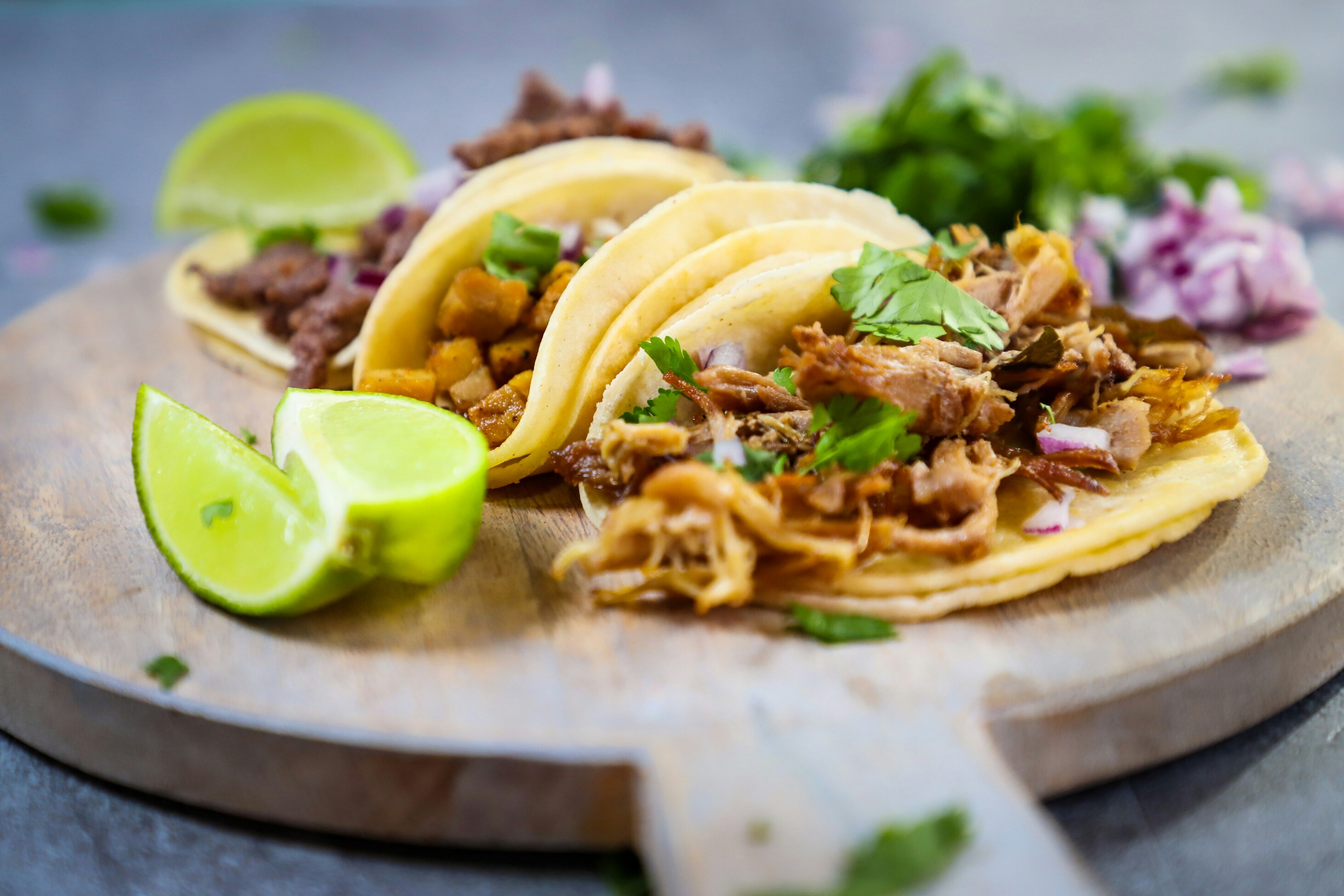
Taquero slicing Tacos al Pastor from a trompo
2. Bánh Mì (Vietnam)
The Bánh Mì is a masterclass in culinary rebellion and adaptation, perfectly illustrating the complex legacy of colonialism in global culinary culture.
- Origin City: Saigon (Ho Chi Minh City), Vietnam
- Historical Era: 1880s – 1950s
- Key Ingredients: Baguette, pâté, cold cuts, cilantro, cucumber, pickled daikon and carrots.
During the French colonial period in Indochina, the French introduced baguettes and pâté. Originally, these items were expensive and reserved for the colonizers. However, after the French defeat at Dien Bien Phu in 1954, the Vietnamese reclaimed the sandwich. They modified the bread recipe to include rice flour (making it airier and crispier) and stuffed it full of bright, acidic, and spicy Vietnamese flavors. Today, it stands as a triumphant symbol of Vietnamese culinary ingenuity.
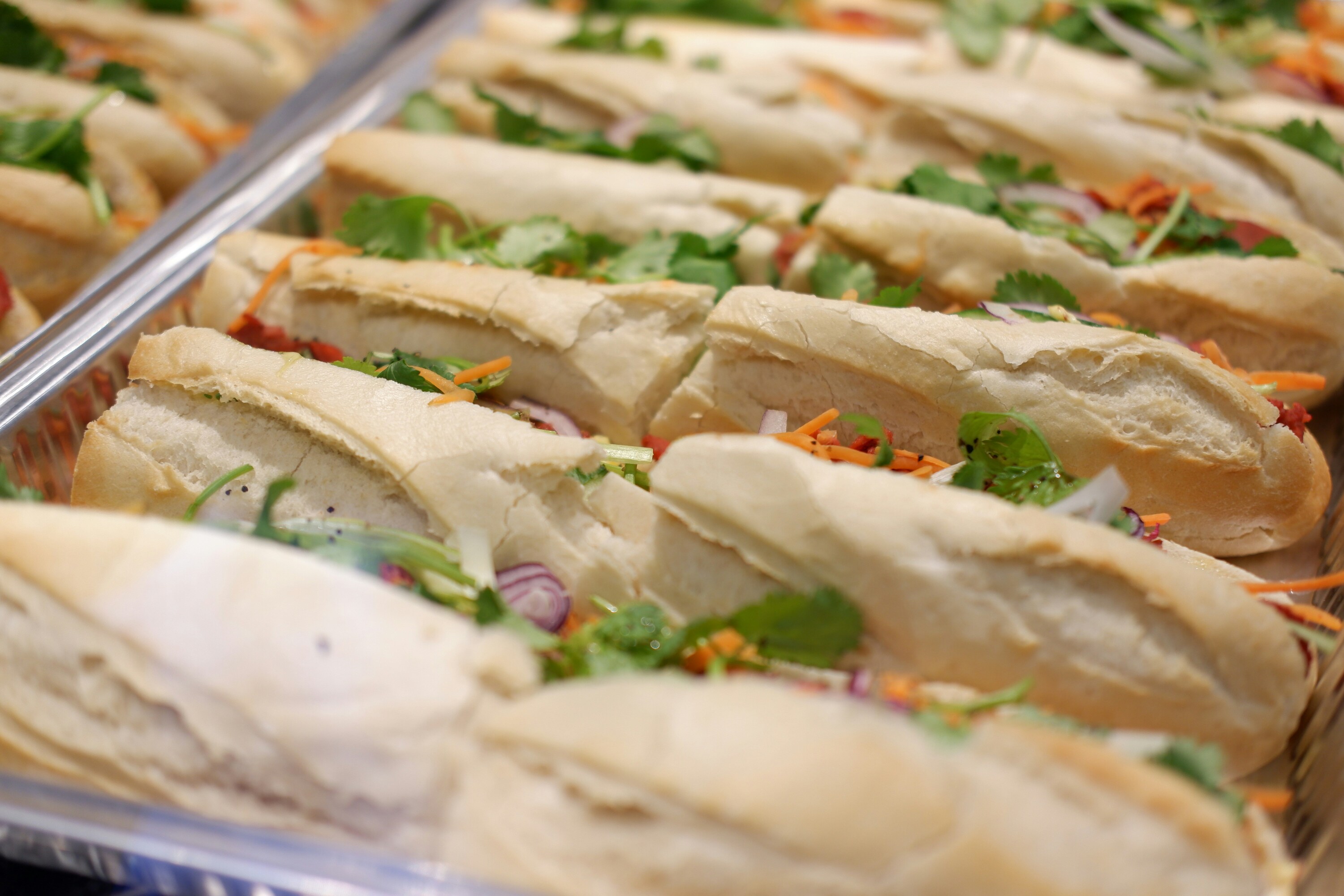
Vietnamese Banh Mi sandwich sliced in half
3. Currywurst (Germany)
A dish born out of the ashes of World War II, Currywurst is a testament to survival and the blending of post-war cultures in Berlin.
- Origin City: Berlin, Germany
- Historical Era: 1949
- Key Ingredients: Steamed and fried pork sausage, curry powder, ketchup/tomato paste.
In 1949, a woman named Herta Heuwer was running a street stand in a devastated Berlin. By trading local spirits with British soldiers stationed in the city, she obtained curry powder. She mixed this exotic spice with stewed tomatoes and poured it over chopped pork sausage. This cheap, high-protein, richly flavored dish became an instant hit with the construction workers rebuilding the city.
4. Takoyaki (Japan)
Japanese street food culture is highly localized, and Osaka’s signature dish, Takoyaki, represents the resilient spirit of the Kansai region.
- Origin City: Osaka, Japan
- Historical Era: 1935
- Key Ingredients: Wheat flour-based batter, diced octopus (tako), pickled ginger, green onion, takoyaki sauce.
Following the Great Kanto Earthquake and the subsequent global depression, food was scarce in Japan. A street vendor named Tomekichi Endo sought to create a cheap, filling snack. Inspired by a similar dumpling called * Akashiyaki* (which used a heavy egg batter), Endo adapted a western-style wheat flour batter and stuffed it with affordable, abundant octopus from the Seto Inland Sea. It quickly became the definitive soul food of Osaka.
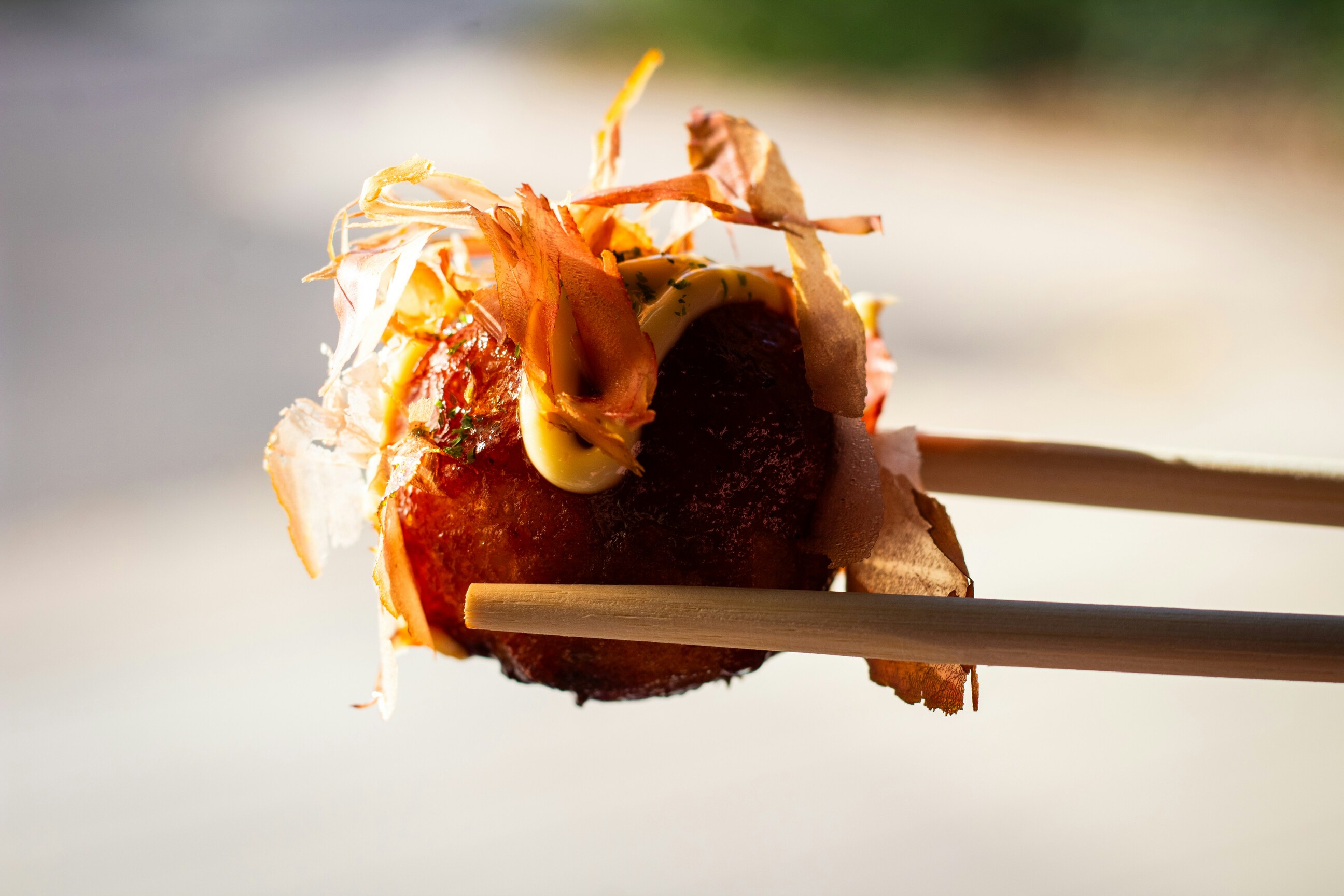
Japanese street vendor making Takoyaki
5. Bunny Chow (South Africa)
Despite its cute name, Bunny Chow contains no rabbit. It is a profound culinary artifact of South Africa’s complex racial and labor history.
- Origin City: Durban, South Africa
- Historical Era: 1940s
- Key Ingredients: A hollowed-out loaf of white bread filled with rich meat or bean curry.
In the mid-20th century, a large community of Indian indentured laborers lived in Durban, working in the sugar cane fields. Under apartheid laws, non-white citizens were often forbidden from sitting inside restaurants. To serve the Indian laborers quickly and cheaply without requiring plates or silverware, local Indian restaurant owners (known as banias) began hollowing out loaves of cheap white bread to act as edible bowls for hearty curries.
Next time you travel, skip the tourist-trap restaurants and head to the local food carts. You aren't just buying lunch; you are consuming history.

Written by VoyZee Team
Official VoyZee editorial team
